
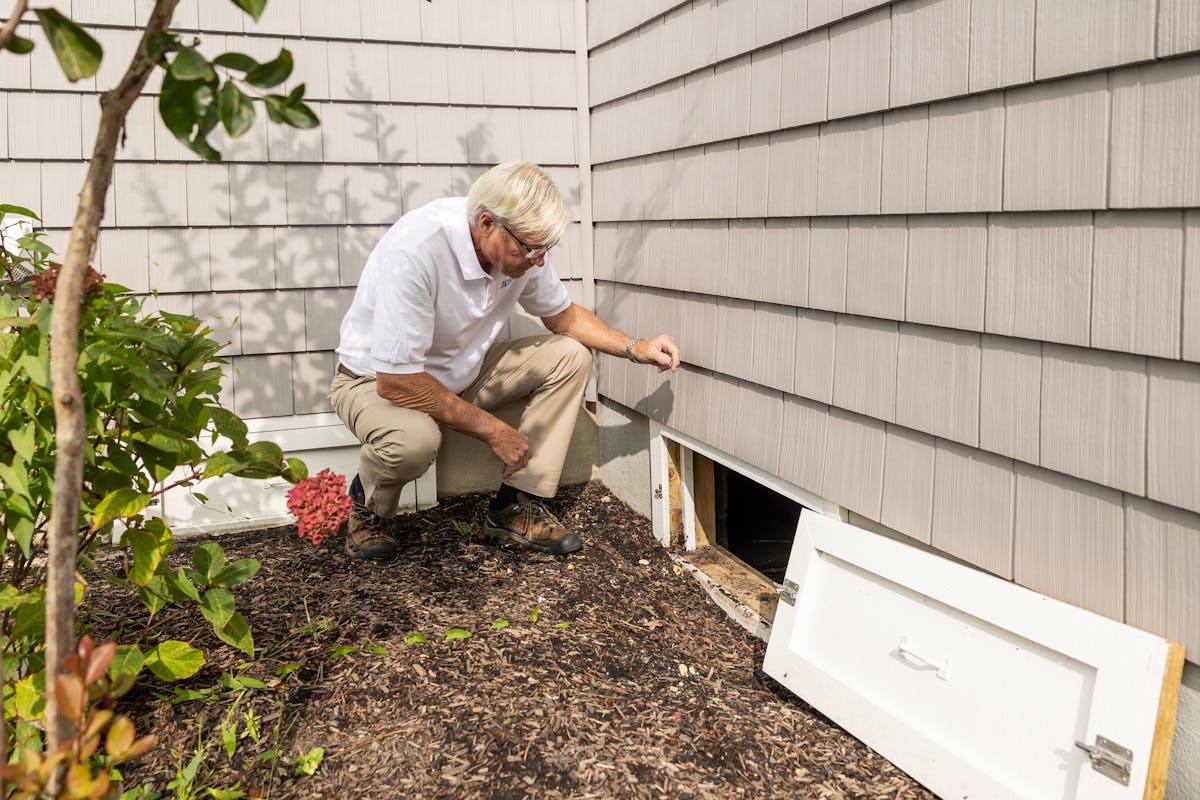
Why crawl spaces in Caldwell grow mold
Short answer: crawl space mold grows when moisture collects under the house: from the soil, plumbing leaks, poor drainage or seasonal water, and a missing or damaged vapor barrier lets that moisture reach the wood.
Many homes in Caldwell and across Canyon County are built over crawl spaces. Common local causes include:
- Damaged or missing vapor barrier: exposed soil releases moisture into the crawl space air.
- Plumbing and drain leaks: a dripping supply line or a cracked drain can soak insulation and joists for months unnoticed.
- Irrigation and drainage: sprinklers spraying the foundation, poor grading, downspouts dumping next to the house, and higher water levels during irrigation season can all push water under the home.
- Condensation: warm, humid air meeting cool surfaces, especially around ducts and pipes.
- Ventilation problems: blocked foundation vents or a crawl space that was sealed without controlling humidity.
Signs of crawl space mold
- A musty smell inside the house, especially near floor registers or closets
- White, gray, green or black growth on joists and the underside of the subfloor
- Insulation sagging, falling down or visibly wet
- Standing water, damp soil or a torn plastic barrier
- Soft spots in the floor above or cupping hardwood
- A home inspection report noting “microbial growth in crawl space”
How crawl space mold remediation works
- Inspection: moisture readings in wood, humidity checks and a look at drainage, plumbing and the vapor barrier.
- Water source correction: leaks repaired, drainage or grading addressed, standing water removed.
- Removal of damaged materials: wet or moldy insulation and debris are removed and bagged.
- Cleaning the wood: joists and subfloor are cleaned using methods such as HEPA vacuuming, scrubbing, sanding or media blasting, chosen by our team for the conditions.
- Treatment and drying: wood is dried to normal moisture levels and may be treated or encapsulated with a coating.
- Moisture control: a new vapor barrier, and in some cases encapsulation or a dehumidifier, to keep humidity down long-term.
Ask our team which steps your crawl space needs. Not every home needs full encapsulation, and the right answer depends on drainage, soil moisture and how the home is ventilated.
Why it matters for the whole house
Air moves upward from the crawl space into living areas, so crawl space mold often shows up as a smell upstairs. Ducts running through the crawl space can also carry odors into rooms (see HVAC and duct mold). Fixing the crawl space is often the most effective part of mold remediation in Caldwell, Idaho for homes that smell musty but show no visible mold indoors.
Crawl space mold is also one of the most frequent findings when Caldwell homes are sold. If you are on a deadline, our page on mold removal for home sales explains what buyers and sellers typically expect.
