
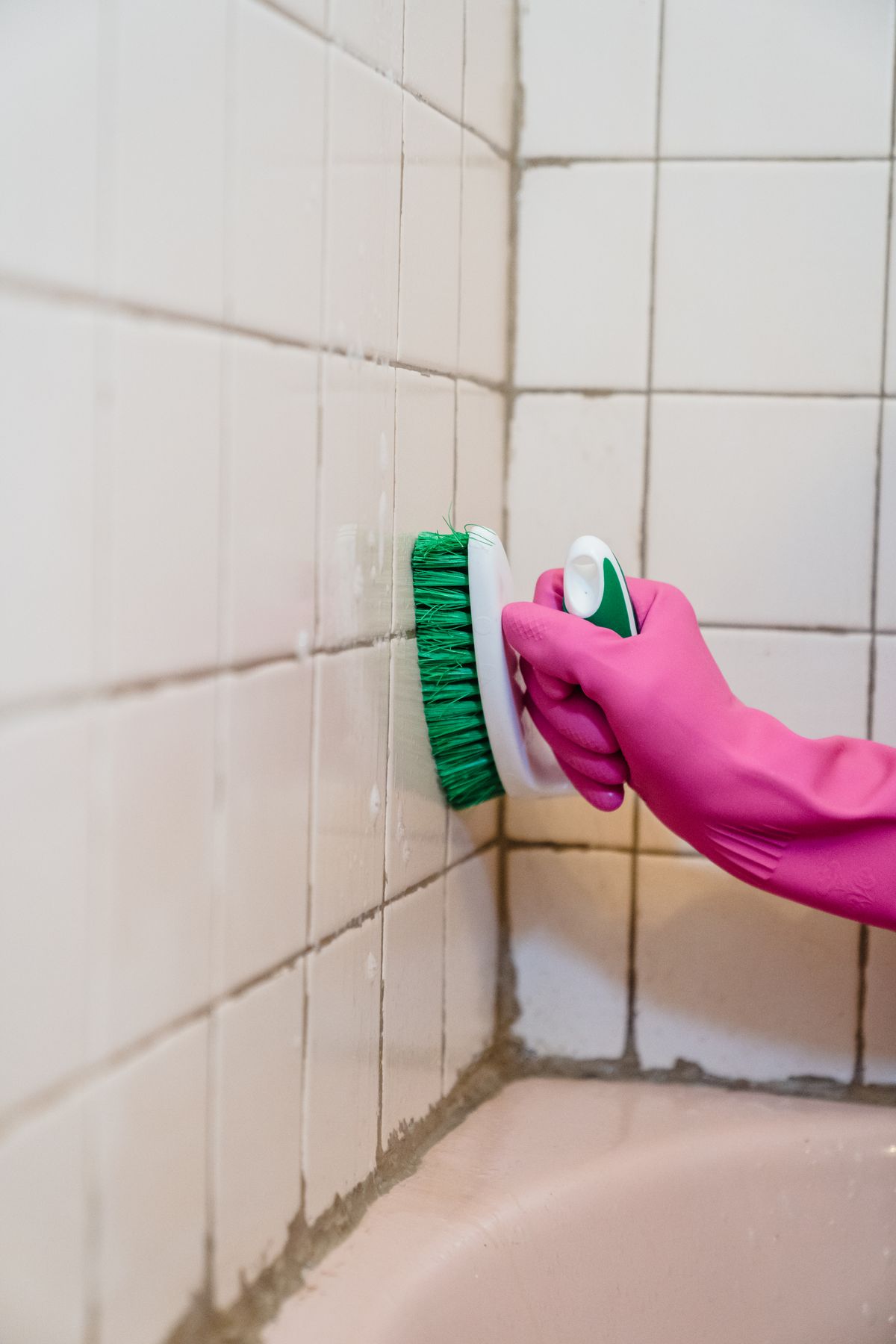
Surface mildew or a real mold problem?
Short answer: small spots on grout, caulk or tub surrounds are surface mildew you can usually clean. Call a professional when mold covers a large area of ceiling or wall, returns soon after cleaning, or shows up as stains, soft drywall, loose tile or a spongy floor.
Common causes of bathroom mold
- Poor ventilation: no exhaust fan, an undersized fan, or a fan that vents into the attic rather than outside (which can also cause attic mold)
- Failed caulk and grout letting shower water into the wall cavity
- Leaking shower valves, drains and supply lines inside walls
- Toilet wax ring leaks that soak the subfloor and the ceiling below
- Vanity and sink leaks that stay hidden inside the cabinet
Signs the mold is behind the surface
- Ceiling spots that return within days of cleaning
- Paint bubbling or peeling on walls near the shower
- Loose or cracked tile, or tile that sounds hollow
- A soft or discolored floor around the toilet
- Staining on the ceiling of the room below the bathroom
- Mold on the bottom of the vanity cabinet or the wall behind it
How bathroom mold remediation works
Our team will first find the leak or ventilation problem, often using a moisture meter around the tub, toilet and vanity. Depending on what we find, remediation may include removing moldy drywall or ceiling sections under containment, removing a vanity or toilet to reach the subfloor, cleaning and drying framing, and recommending fan upgrades or plumbing repairs. Tile and shower work may require a separate contractor once the mold is removed.
Because bathrooms are small, good containment matters even more: it keeps spores out of bedrooms and hallways during demolition. This is the same approach used for all mold removal and remediation in Caldwell.
Preventing bathroom mold from coming back
- Run the exhaust fan during showers and for about 20 to 30 minutes afterward
- Make sure the fan duct ends outdoors, not in the attic
- Replace cracked caulk and seal grout
- Fix drips at faucets, shower valves and supply lines promptly
- Keep indoor humidity in the range the EPA recommends (below 60%, ideally 30% to 50%)
If a leak has already damaged the wall, see wall and drywall mold removal.
